Understanding Chrome-Tanned Leather and Water Damage
When a favorite leather jacket, pair of boots, or structured handbag gets soaked in a rainstorm, panic usually sets in. However, the exact way you respond dictates whether your item survives or becomes a stiff, unwearable casualty. To successfully fix stiff chrome-tanned leather water damage, you first need to understand what happens beneath the surface on a chemical level.
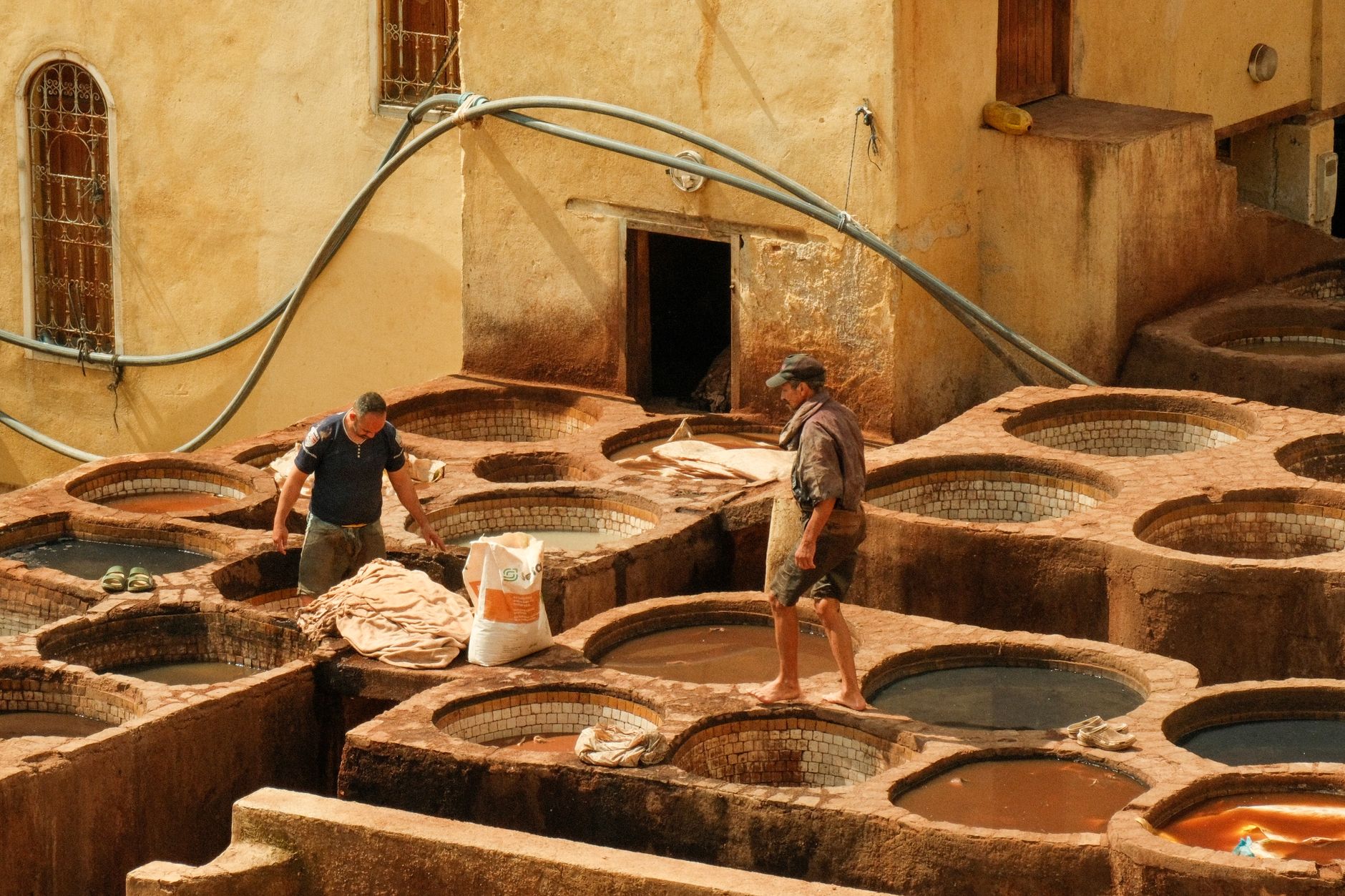
Chrome tanning is the modern industry standard, accounting for roughly 80 to 90 percent of all global leather production. Unlike traditional vegetable tanning—which uses organic tree barks and takes weeks—chrome tanning relies on chromium sulfate and other chromium salts. This chemical process takes mere days and yields a hide that is remarkably soft, supple, stretchable, and highly resistant to heat and water.
Yet, "water-resistant" is not the same as "waterproof." When large quantities of water saturate chrome-tanned leather, two destructive things happen:
- Leaching of Fats and Oils: Water acts as a solvent, flushing out the critical lubricating fatliquors (emulsified oils) that were introduced during the final stages of the tannery process to keep individual collagen fibers gliding smoothly past one another.
- Capillary Dry-Down: As the water molecules evaporate, the denuded collagen fibers draw tightly together and bond rigidly in a deformed state. Without internal oils to keep them separated, the leather dries hard as a board, brittle, and prone to cracking.
Solving Chrome-Tanned Leather Stiffening After Water Exposure requires patience, precise chemistry, and physical manipulation. Rushing the process will permanently ruin the grain.
Diagnostic & Damage Repair: Assessing the Severity
Before diving blindly into conditioning and stretching, you must perform a thorough diagnostic of the damage. Not all water damage is created equal, and mistreating salt-stained leather or heat-baked leather will destroy the item instantly.
The Moisture and Temperature Test
Run your hand gently across the stiffened leather surface. Does it feel damp, completely dry, or clammy? Is it uniformly stiff, or are there localized rigid crusts?
- If it is still wet: Do not condition yet. Let it air dry at room temperature until it reaches a "near-dry" state (cool to the touch, slightly pliable, but mostly dry).
- If it feels hot or brittle: Check for heat distortion. If the leather was left near a radiator or in a hot car while wet, the chromium bonds may have denatured, causing irreversible shrinkage.
Identifying White Residue (Mineral and Salt Bloom)
Often, water damage leaves behind ugly white crusts. This is rarely mold on fresh chrome leather; rather, it is mineral bloom (calcium and magnesium) or tanning salts drawn to the surface as the water evaporated. These minerals exacerbate stiffness by drying out the surface grain. Always clean these away using a damp microfiber cloth and a dedicated leather cleaner before attempting to re-condition.
Step-by-Step Guide to Restoring Suppleness
Once your diagnostic confirms that the leather is structurally sound but suffering from lost internal lubrication, you can begin the restoration protocol. Follow these steps meticulously to fix stiff chrome-tanned leather water damage without over-conditioning.
Step 1: Gentle Cleaning and Surface Prep
Dirt and grime act like sandpaper when ground into stiff leather.
- Wipe down the item using a damp cloth and a pH-balanced leather saddle soap or cleaner.
- Pat the leather with a dry towel to lift surface moisture.
- Allow the item to rest in a well-ventilated room out of direct sunlight until it reaches a semi-dry, room-temperature state. Never use a hair dryer, heat gun, or tumble dryer.
Step 2: Selecting the Right Conditioning Agent
Chrome-tanned leather is chemically distinct from vegetable-tanned leather. It requires specialized care. Vegetable leather loves heavy waxes and dense tallow (like mink oil), but heavy petroleum or wax products can suffocate chrome-tanned leather, leaving a sticky, greasy residue that attracts dirt.
| Leather Type | Ideal Conditioning Agents | Products to Avoid |
|---|---|---|
| Chrome-Tanned | Neatsfoot oil, lanolin-based lotions, emulsified mink oil sprays, leather milk | Heavy saddle soaps with high alkali, pure paraffin wax, heavy petroleum jelly |
| Vegetable-Tanned | Neatsfoot oil, mink oil, dubbin, leather grease | Lightweight synthetic silicone sprays (insufficient hydration) |
Step 3: Application and Penetration
Pour a quarter-sized amount of your chosen conditioner onto a clean, soft microfiber cloth or sponge.
- Work the conditioner into the leather using small, circular motions.
- Ensure even coverage across every seam, fold, and panel.
- Focus heavily on high-stress zones where stiffness is most pronounced, such as boot vamps, jacket elbows, or bag handles.
- Allow the conditioner to penetrate for 15 to 30 minutes. If the leather drinks it up instantly, apply a second ultra-thin coat.
Step 4: Physical Manipulation (The Crucial Step)
Chemical conditioning alone will not fully fix stiff chrome-tanned leather water damage. You must physically break the surface tension of the locked collagen fibers.
- As the leather absorbs the conditioner and becomes slightly pliable, gently massage, flex, roll, and knead the material with your hands.
- For jackets, gently pull the leather diagonally across the grain to stretch and separate the fibers.
- For boots, gently bend the shaft back and forth and flex the toe box area.
- Warning: Never yank or pull violently, or you will tear the weakened, water-damaged stitching or split the grain.
Preventing Future Water Damage and Stiffness
An ounce of prevention is worth a pound of cure, especially when dealing with high-end leather goods. Once you have successfully restored your item, take proactive steps to ensure you never have to repeat this arduous process.
Apply a Fluoropolymer or Silicone-Free Water Repellent
Modern waterproofing technology relies on breathable barrier sprays. Look for water-repellent sprays designed specifically for smooth leather (avoid silicone heavy sprays that clog leather pores). These sprays coat individual leather fibers, causing water to bead up and roll off rather than soaking in and leaching out the fatliquors.
Proper Post-Rain Routine
If you get caught in a downpour again, follow these rules immediately when you get home:
- Empty the item: Remove all contents from pockets or bags. Unlace boots completely.
- Shape it: Stuff wet shoes with crumpled newspaper or cedar shoe trees to maintain structural integrity. Hang wet jackets on wide, padded wooden hangers.
- Air dry naturally: Place the item in a room with good airflow at normal ambient temperature. Give it 24 to 48 hours to dry completely.
- Light condition: Apply a very light maintenance coat of leather conditioner only after the item is 100% dry to replenish any oils lost during the storm.